Paris
Simple PassionParis is both the setting of the narrator’s daily life and the imagined landscape of her attachment to A. Across ordinary routines, long periods of waiting, and one improbable return, the city measures how her attention shifts from the practical business of living to the uncertain prospect of contact with him—and how little that contact can finally resolve.
Daily Life Reorganized
From the previous September, the narrator says, her days in Paris were organized around waiting for A to call and visit. She continued to shop, go to the cinema, take clothes to the dry cleaner, read, and mark essays, but these familiar activities seemed to proceed almost automatically. She recalls them only vaguely, as though daily life had lost its particular texture. The actions to which she still gave deliberate thought were those related to A: reading about his country and choosing clothes and makeup.
That narrowing also governed what she heard and read. In conversation, her attention came alive when a topic touched on A’s work, his country, or places he had visited; a description of a Havana nightclub could captivate her because A might once have been there. In books, she seized on accounts of relations between men and women, taking them as possible instruction about him and as support for what she wished to believe. Paris was thus not simply where she lived: it was the everyday environment through which she searched for signs connected to A.
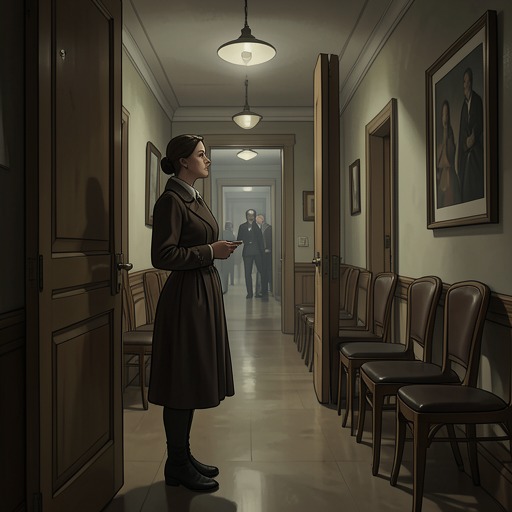
The telephone transformed the city apartment into a place of vigil. The narrator tried not to leave home except for work, since A knew her working hours and might call while she was out. She avoided using the vacuum cleaner or hairdryer in case their noise concealed the ring. Each call brought a brief surge of hope, usually extinguished by the time she reached the receiver and discovered it was someone else. When A’s voice did come through, the jealousy and distress of waiting subsided so quickly that she felt as if she had passed from madness back into sanity. The voice itself seemed slight beside the enormous importance it had acquired in her life.
Streets, Heat, and Imagined Rivalry
In spring, waiting spread beyond the apartment and became continuous. An early heat wave, summer dresses, crowded café terraces, and the sound of the Lambada seemed to promise pleasures that the narrator feared A would pursue without her. She imagined that his professional position in France would attract other women, while she found no reason to think that she could hold him back. The city’s public life therefore intensified rather than relieved her isolation: signs of pleasure around her became evidence, in her imagination, of a world from which A might choose another companion.
When she went into Paris, she expected to see him driving past with a woman beside him. She arranged herself in advance for this imagined encounter, walking with apparent pride and indifference; the encounter never happened, and the anticipation ended in frustration. On the Boulevard des Italiens, she pictured herself moving beneath A’s imagined gaze even though he was elsewhere and inaccessible. The scene she could not stop seeing was of him driving toward the park in Sceaux or the wood in Vincennes, windows down and radio playing. These imagined crossings gave the city a double geography: the streets she actually walked and the routes along which she pictured A moving beyond her reach.
A television-weekly article about Cuban dancers touring in Paris supplied another focus for jealousy. Its description of the dancers and photograph of one performer led the narrator to become convinced that A, who had been to Cuba, had met the woman. She imagined them together in a hotel room and found the possibility that this had not occurred almost harder to accept than the imagined scene itself. The article records how Parisian news and images could become material for an intimate story that the narrator had no independent way to verify.
Leaving Paris in Imagination
The narrator’s journey to Florence made clear that separation from Paris did not end the affair’s hold on her attention. During eight days alone, she spoke only to restaurant waiters and remained preoccupied with A. She later understood walking through the streets, visiting museums, and staying in a noisy hotel by the Arno as a way of having written out her passion through experience. In museums, she sought works representing love and recognized A in the forms of male statues; Michelangelo’s David particularly arrested her. The visit became, in her interpretation, a further investment in love, made through imagination and longing in his absence.
Back in the account of life after A’s departure, the Parisian surroundings did not offer easy distraction. He had left France for his own country six months earlier, and the narrator thought she might never see him again. She describes waking at two in the morning in despair and struggling to fill the day so she would not feel lost. Dressing and applying makeup required effort, as did wearing contact lenses instead of glasses. Television and magazines were difficult to bear because advertisements seemed to repeat the image of a woman waiting for a man; she also turned her gaze away from lingerie shops. The everyday city and its media had become reminders of the very waiting she was trying to endure.
Return and the Limits of Reunion
On the first Sunday evening of the Gulf War, A called. The narrator was seized by panic, repeated his name, and cried. He wanted to see her immediately and said he would take a taxi. In the half-hour before he arrived, she dressed and put on makeup in a frenzy, then waited in the hallway wearing a shawl he had never seen. He entered without knocking, as he had in the past. His return briefly restored the familiar pattern of anticipation and arrival, but the scene is not presented as a new beginning secured by the reunion.
Afterward, A wanted coffee. He told her that his life in the East involved the same work he had done in France and that he still had no child, though his wife wanted one. He looked more tired, and the narrator noticed changes in his nails and hands, which she thought might be related to the colder climate in his country. When she reproached him for not keeping in touch, he responded by asking what a call would have accomplished beyond a greeting and an inquiry after her. He had not received her postcard from Denmark, which she had sent to his former workplace in Paris.
They dressed, gathering their clothes from the tiled floor, and the narrator drove A back to his hotel near the Étoile. They kissed and touched at traffic lights between Nanterre and Pont-de-Neuilly. On her return, in the tunnel at La Défense, she asked herself where her story was and concluded that she could hope for nothing more. Paris had brought A back within reach for an evening, but the meeting exposed the distance between renewed contact and any lasting promise. Its decisive significance lies in that contrast: the city had sustained the narrator’s anticipation, yet reunion did not restore the story she had been waiting to continue.